Greens from Dyers Polypore


Dyers polypore (aka, velvet-top fungus, dyers mazegill, pine dye polypore, Phaeolus schweinitzii) can be found at the base of decaying conifer trees across North America and Eurasia. While its dyeing power is strongest when used fresh, it can also be used when dried.
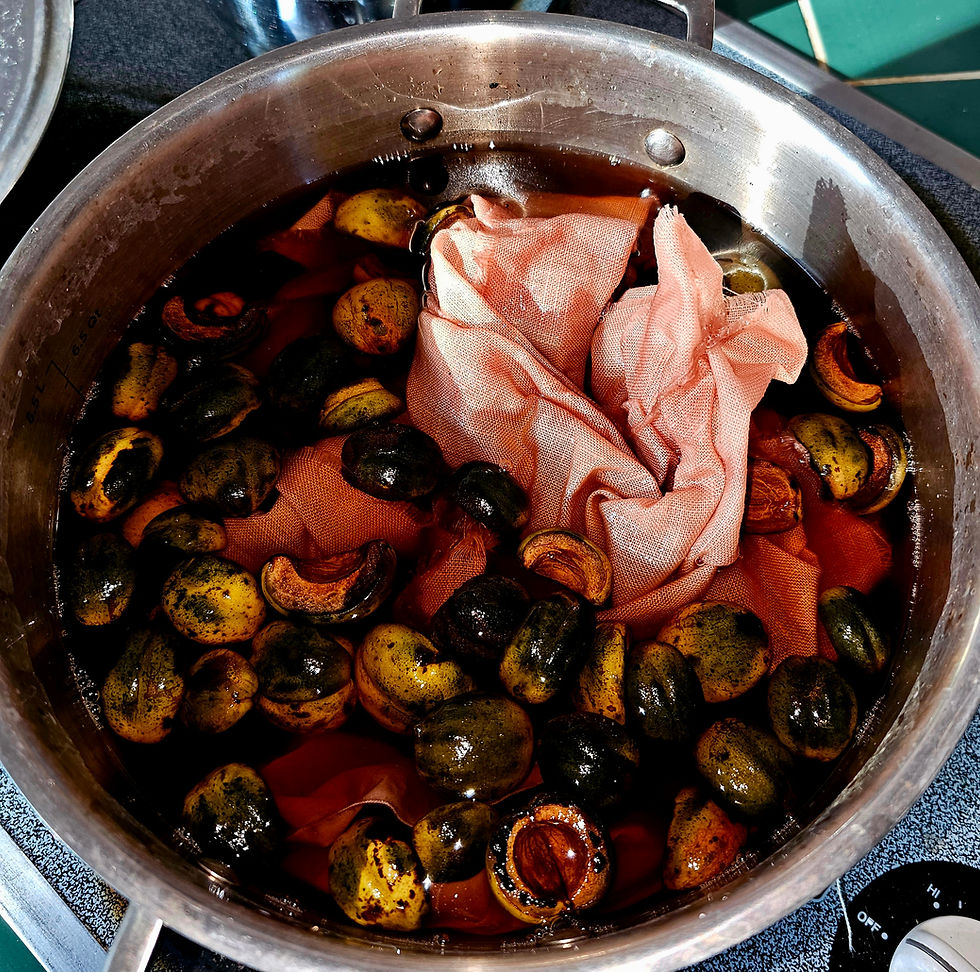
In my case, I had a jar of old dyers polypore that my spawnling found in the woods. (Funny thing when you have your slightly feral child so well trained that they come home with dyers polypore as "Loot". I am a proud mom.) The jar was getting old, and I was missing greens in my fabric collection, so it was time for the pot. Since dyers' polypore works better on protein fibers than cellulose fibers, I only added wool and silk to the pot, along with a complete set of swatches for the website.
Yellow: The procedure
51 grams of dyers polypore (old and dried)
Fabric weighed: 333 grams (samples, wool, and silk) - pre-soak for at least 1 hour
I added the dyers polypore to a mesh bag
Add the bag to a full pot of water (pH 7).
Medium heat until the bath reached a simmer, then turned it down to maintain the low simmer. Because it was old, it took a while for the dye to come out of the old mushrooms. I left it to simmer for 1 hour. (I recorded this as pH 5)
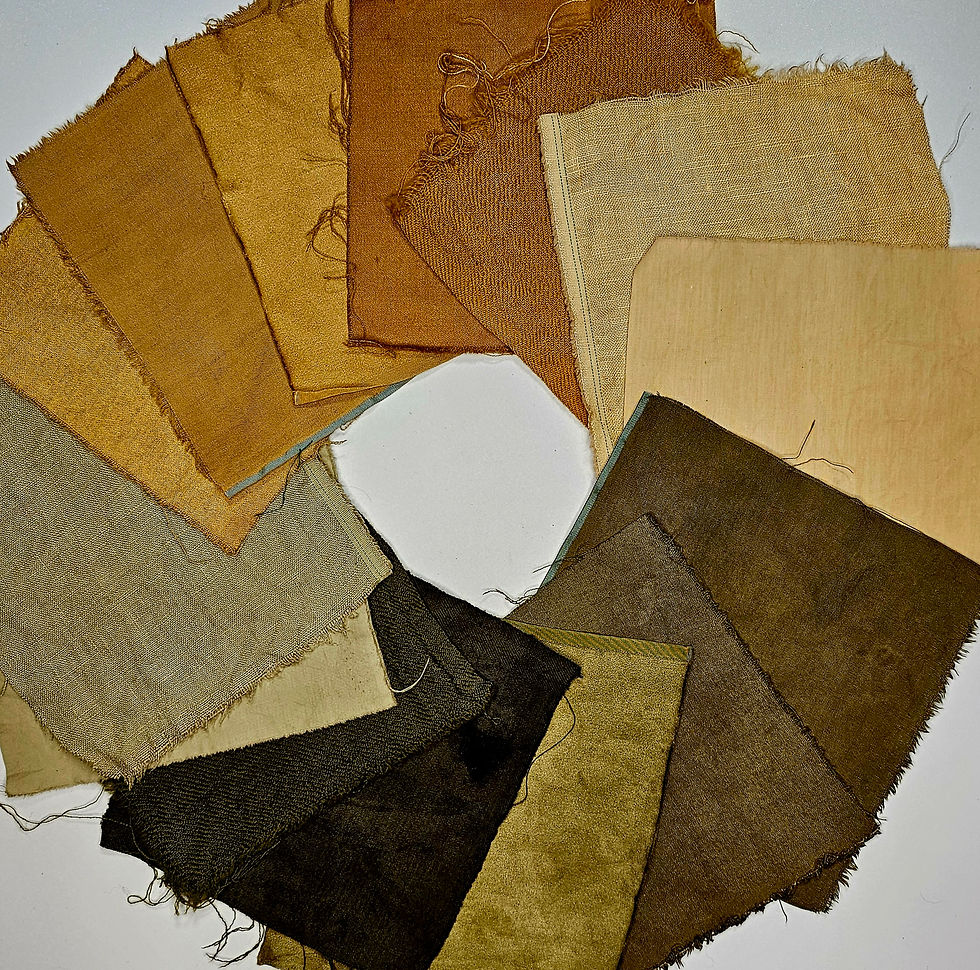
Add a full set of pre-soaked samples and NO mordant. Technically, dyers polypore does not require a mordant, although adding one will increase the wash and lightfastness of the fabric. Results below.
5S Dyers Polypore on Cotton - No mordant 4S Dyers Polypore on Linen- No mordant 3S Dyers Polypore on Silk Noil- No mordant 1S Dyers Polypore on Wool- No mordant
Greens: The procedure
Keep the 51 grams of dyers polypore in the pot.
Fabric weighed: 333 grams (samples, wool, and silk) - pre-soak for at least 1 hour
Ferrous Sulfate: 50 grams (15% DWOF)
Removed the mesh bag of dyers polypore from the pot and set it aside.
Add mordant and bring back to a simmer. Topped it off with water because it was cooking for a while. Stir well to dissolve the mordant.
Add pre-wetted fabric to the pot, stir well. Let simmer 2 hours. (I recorded this as pH 3)
Dyers Polypore + Ferrous Sulfate on Wool 1T Dyers Polypore on Cotton - Ferrous Sulfate 9S Dyers Polypore on Linen - Ferrous Sulfate 7S Dyers Polypore on Silk Satin - ferrous sulfate 8S Dyers Polypore on Silk Noil - ferrous sulfate 6S Dyers Polypore on Wool - ferrous sulfate
Exhaust Bath: I added more fabric because there was still color in the water (and a little more mordant). The silk noil came out ok, but the bath was done after that.
And of course, now I want to collect some more because I know it can give a vibrant orange too. Got to collect them all, I guess.